EVN Climate Initiative
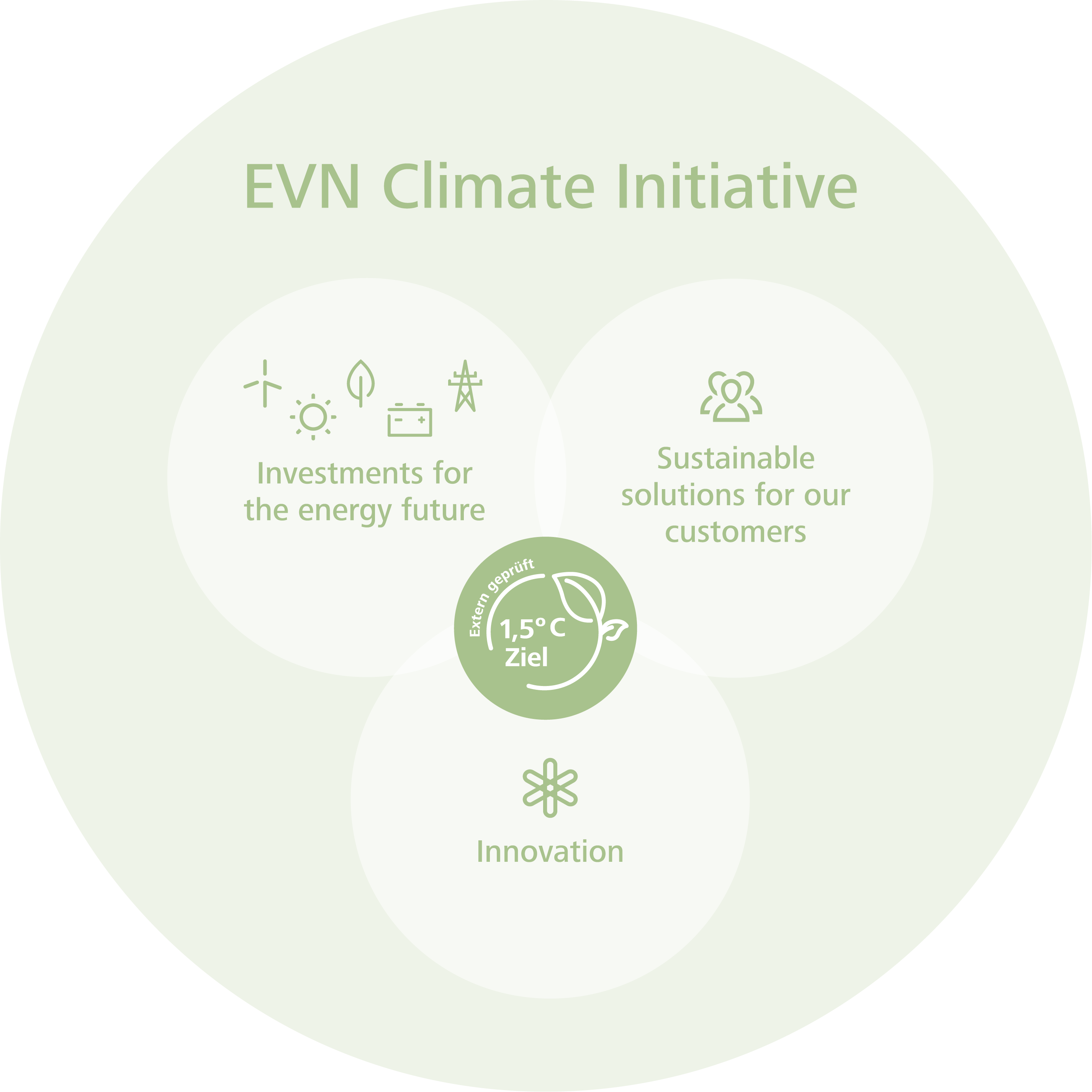
The EVN Climate Initiative is an integral part of our Strategy 2030 and represents our 1.5°C transition plan to decarbonise our company. It bundles our investments for the energy future with the expansion of our renewable
generation capacity and renewable heat supplies. Our customers are also included through the creation of sustainable solutions for supplies of renewable electricity and heat. These initiatives are supplemented and supported by the targeted development and use of innovative products, for example in flexibility management and digital customer solutions for prosumers.
1.5°C-transition plan for climate change mitigation
TClimate protection and the necessary transformation of the energy sector have formed the focal point of our Strategy 2030 since its adoption in 2019/20. We have pursued these goals consequently over the past years with the implementation of numerous measures and have already reached key milestones on our road into a renewable energy future. One important decarbonisation step was our final exit from electricity generation
from coal in 2021. We are also continuously driving the transformation of our generation portfolio and making substantial progress in the area of renewable energy supplies with the reduction of thermal plants and the targeted expansion of renewable generation capacity.
We have defined central decarbonisation goals to realise our 1.5°C transition plan. These goals create the operational foundation for our reduction path and will be implemented on a step-by-step basis over time:
• Strong expansion of our renewable generation capacity (wind power, photovoltaics, battery storage)
• Revitalisation of existing hydropower plants and increase in pump storage capacity
• Expansion and/or transformation of our heat generation
• Reduction of greenhouse gas emissions from the gas network
• Reduction of greenhouse gas emissions from electricity network losses and from electricity distribution in Bulgaria and North Macedonia
We have worked diligently to strengthen our climate protection goals during the past two years – also in connection with the review and further development of our Strategy 2030. Our new targets for the reduction of greenhouse gas emissions are based on the 1.5°C goal of the Paris Climate Agreement. These amended goals were also submitted to SBTi for scientifically based examination and validation. In line with our diversified business model, we have committed to four climate goals – two intensity and two absolute goals. They cover the material greenhouse gas emission sources from our own business activities (greenhouse gas emissions from electricity and heat generation, electricity network losses and our gas network volumes) as well as greenhouse gas emissions from the upstream and downstream value chain, especially from the use of energy by our end customers. Confirmation of the successful SBTi validation of these goals was received in April 2025. External verification with scientifically based benchmarks and regular internal progress monitoring ensure
that our strategic reduction goals for greenhouse gas emissions are, and will remain, compatible with the Paris Agreement.
For further information on the EVN 1.5°C transition plan please see here.
Innovations and Sustainable solutions for our customers
Research and development activities to support the sustainable reduction of CO2e emissions are an important building block of our efforts to actively contribute to the attainment of the Paris climate goals. They also support the strategic evolution of our business model. In this sense, all our research and development activities are designed to support the realisation of the goals set by the EVN Climate Initiative. We want to support climate change mitigation and the gradual system transformation towards climate-neutral energy generation and, at the same time, safeguard supply security. This takes place within the framework of numerous innovative research and development projects – for example the Batterie STABIL battery storage project and the cross-regional research initiative Green Energy Lab which is supported by provincial energy providers and energy agencies.